

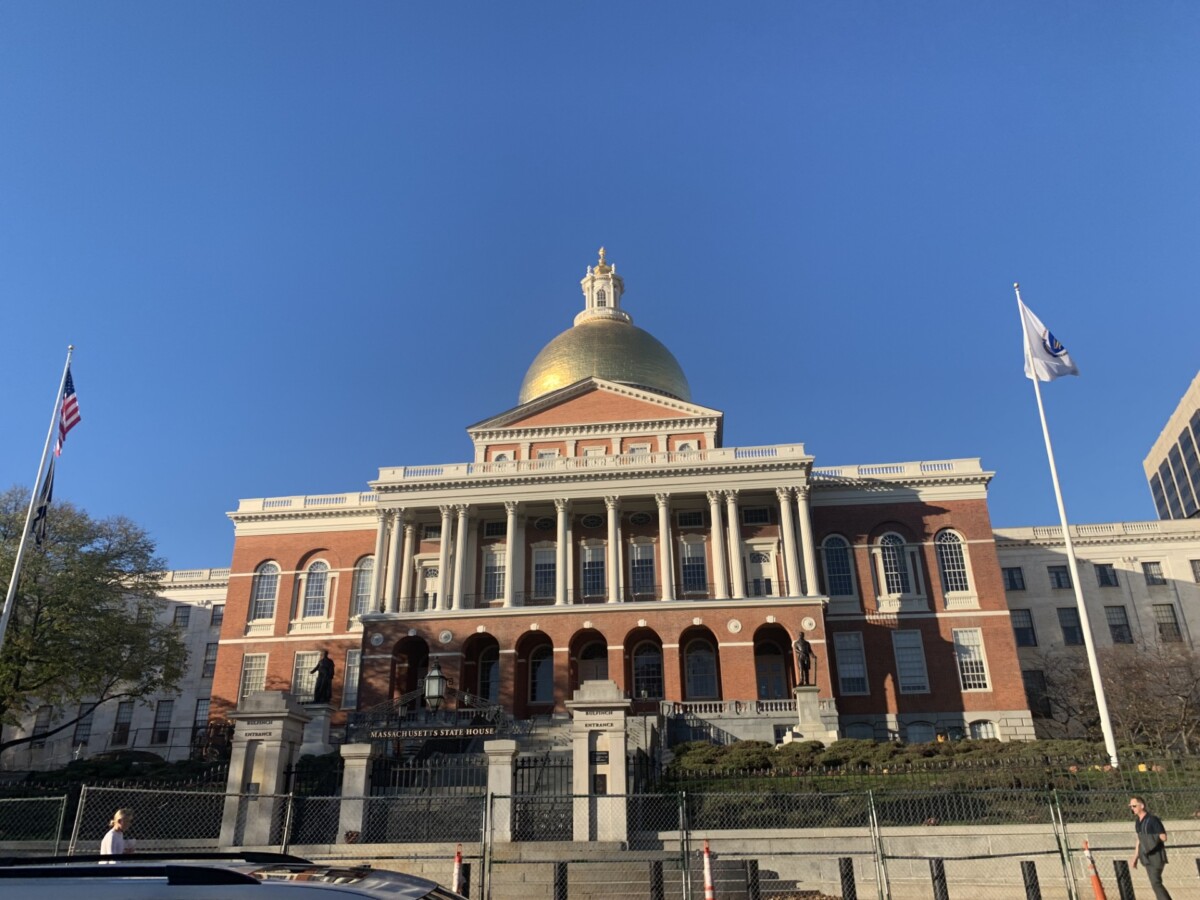
(Photo courtesy of Makayla Mahoney) Outside of Massachusetts state house.
Makayla Mahoney
Connector Editor
Americans gather across the nation on this historically significant day, queuing to exercise their constitutional right to vote. In the state of Massachusetts, you may have sent out a mail-in ballot, visited your local polling station early, or joined the masses on Tuesday, Nov. 3, to determine the state’s future.
This past selection marked the midpoint of President Trump’s term in office, with states across the country running elections to decide on several initiative petitions and appoint their next government representatives.
This Massachusetts’ election had residents vote on the next governor and lieutenant governor, senator in congress, attorney general, secretary of state, treasurer, auditor, all nine representatives in congress, and several more state positions. There were additionally a lengthy eight ballot questions, proposed through citizen initiatives, and a referendum on current state law.
As projected, most incumbents were reelected for their office, including Maura Healey for governor, Ed Markey for U.S. senator, and Andrea Joy for attorney general. Eight of the nine U.S. representatives were reelected, with Dan Koh taking the original position of Seth Moulton in Massachusetts’ sixth congressional district.
Eligible voters were then tasked with deciding the outcome of nine ballot questions.
Question 1 on the Massachusetts’ ballot received a resounding ‘Yes’ by voters, with about 86% of votes, allowing for most state records to be made public, except under certain cases.
Question 2 of the ballot questions received a majority of 64% ‘Yes’ votes as well, allowing employees of the Committee for Public Counsel Services to unionize.
Question 3 did not pass, receiving a majority of ‘No’ votes, at 61%. This leaves primary elections to continue based on political party, rather than introducing a single “top two” primary.
Question 4 of Massachusetts’ ballot questions passed with 56% ‘Yes’ votes, allowing residents of Massachusetts to register to vote on the same day as Election Day. This is a right held by state neighbors, such as Vermont, Connecticut, New Hampshire, and Maine.
Question 5 on the ballot did not pass, with 52% ‘No’ votes. The government of Massachusetts will not be allowed to change their current laws on tax revenue collection.
Question 6 received a majority of 61% ‘Yes’ votes, which will create a fund for natural resource conservation using taxes collected from the sale sporting goods and recreational vehicles.
Ballot question 7 did not pass, having received 50.6% of ‘No’ votes, which was a very close contest. This will leave the state laws as is in regard to building single-family homes in residentially zoned areas.
Question 8 is a referendum looking to overturn the current laws regarding the legal sale and use of recreational marijuana. It lost with 76% ‘No’ votes. This will maintain the current legality of Marijuana sales and use in the state of Massachusetts.
Question 9 is the final initiative petition question on the ballot, passing with 67% ‘Yes’ votes. This will maintain current gun laws and increase firearm regulation in Massachusetts.
Senior political science student at the University of Massachusetts Lowell, Haleigh Harris, reflected on the impact of this midterm election and the role of young voters such as herself:
“It is incredibly important that young voters know how important they are to our political institution. This election cycle showed how much each vote matters. With margins as slim as we saw on Tuesday, it is important to stay energized and vote, even in states like Massachusetts which may be a straightforward call. As the future leaders of America, it is important we start speaking up now to have our voices heard.”
In the second largest elections taking place across the United States, several issues surrounding the country’s current political status were addressed, allowing voters to have their feelings and concerns with the administration conveyed. The state of Massachusetts continued their blue streak with much of the United States following suit, resulting in a Democratic majority in the U.S. Senate, U.S. House of Representatives, and across state governors.

