

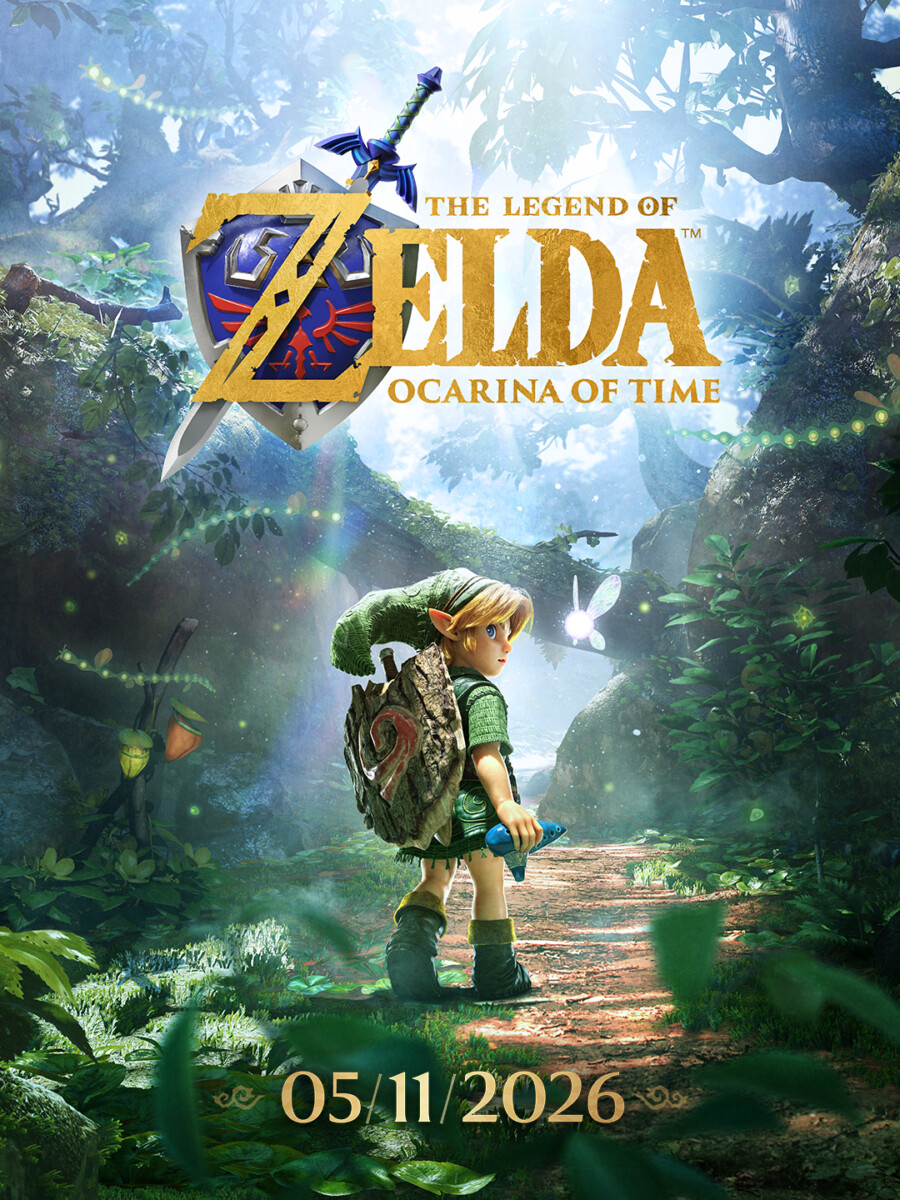
(Image courtesy of IMDb. “‘The Legend of Zelda: Ocarina of Time’ takes players on a dynamic adventure.”)
Rick Dalton
Connector Editor
“The Legend of Zelda: Ocarina of Time” originally released in 1998 exclusively on the Nintendo 64. It is commonly cited as one of the greatest video games of all time. On Nov. 5, 2026, a faithful remake of the game launched on the Nintendo Switch 2. Since its reveal earlier this year, the remake has been one of 2026’s most highly anticipated releases. After several hours of play, it is clear that Nintendo has delivered a must play experience for the Switch 2.
Like most “Zelda” games, players take control of a boy named Link. This entry’s Link begins the story in Kokiri Forest, a secluded town of forest children. Link is the only child without a fairy, until the Great Deku Tree sends a guardian fairy named Navi to bring Link to them. The Great Deku Tree requests that Link destroy a monster that has taken residence within the tree. After Link saves the Great Deku Tree, they reveal that Link is a hero of destiny that is fated to meet Princess Zelda and save the land of Hyrule from the evil Ganondorf. With the help of Navi and his trusty ocarina, Link goes off the Hyrule Castle to find Zelda and meet his destiny.
Link learns several songs to play on the ocarina throughout his journey. Many songs need to be played to trigger story events and solve puzzles. One particularly fun new addition is the ability for the player to swap from traditional button inputs on the gamepad to humming or playing an instrument to match the ocarina’s pitch. Singing Zelda’s Lullaby for the first time is a memorable, heartwarming experience.
Gameplay consists of traversing a semi-open world to find hidden dungeons spread throughout Hyrule that contain the treasures that Link needs to complete his quest. Controls have thankfully been modernized so that they are in line with recent “Zelda” games such as “Tears of the Kingdom.” The opening dungeon in the Great Deku Tree teaches players everything they need to know to complete the game. Link primarily fights with a sword and shield, but he also finds a slingshot early on and eventually finds a bow. Link encounters many items necessary for completing puzzles, such as sticks that can be used as torches and bombs that can blow apart rock walls and open hidden passages. Puzzles are fun and intuitive. Link can always find more of what he needs from clay pots and enemy drops as supplies run low, which helps keep the pace up between action sequences. Dungeons generally end with a boss fight, during which Link must use all the tools at his disposal to emerge victorious. The game is not very difficult, so gamers of all experience levels should be able to complete the experience.
Visually, Hyrule has never looked better. It has the look of a fantastical Pixar film. There are so many subtle graphical details that help bring the world to life. Link kicks up dust with each footstep in Hyrule Castle Town, and blades of grass blow in the wind and react as Link jumps on them in Hyrule Field. New to this version are fully voiced cutscenes, although standard dialogue remains silent. Each location has its own beautiful, sweeping orchestral score. Returning players will recognize the score, although much of it has been upgraded to sound much fuller than the Nintendo 64 version. The game is an audio-visual feast, easily one of the most impressive games available on the Switch 2.
“Ocarina of Time” is one of the prettiest, smoothest gaming experiences of the year. This remake proves that great games are great games, no matter how long ago they were created. New players will finally get to experience one of the greatest action adventures titles of all time, and returning players will enjoy the new definitive version of this timeless classic.
Grade: A

