
UMass Lowell Connector Logo

Hot Hoops: UML men’s basketball 3-0, women’s basketball 2-1 on opening week

The 2026-27 college basketball season is officially underway, and both UMass Lowell basketball programs have given River Hawks fans plenty to be excited about.

The men’s basketball team opened its season with three consecutive victories, improving to 3-0 under head coach Pat Duquette. Meanwhile, the women’s basketball team began the Brianna Finch era with two convincing wins before suffering its first loss of the season on Sunday.

Both programs entered the season with plenty of new faces, but their opening-week performances have already provided reasons for optimism.

Men’s Basketball: A Perfect 3-0 Start

The men’s team opened its season on Monday, Nov. 2, with a dominant 121-57 victory over Rivier University at the Kennedy Family Athletic Complex.

Freshman Jasiah Cannady led the River Hawks with 16 points in his collegiate debut, while seven UML players finished in double figures. The River Hawks also recorded 29 assists, showcasing their ability to distribute the basketball.

“The 29 assists is the big stat that tells the story for us,” associate head coach Matt Graves said following the victory. “We really did a good job sharing the ball with seven guys in double figures.”

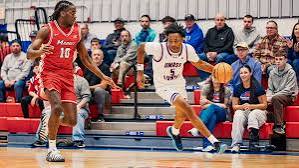
The River Hawks faced a much tougher challenge on Thursday, Nov. 5, traveling to North Andover to take on Merrimack in the inaugural America East-Metro Challenge.

Sophomore Jayden Harris delivered the best performance of his collegiate career, recording 26 points and 11 rebounds for his first career double-double. Sophomore Victor Okojie added 16 points and six rebounds, while senior Jakai Newton contributed 12 points.

UML led 38-26 at halftime and held off a second-half push from the Warriors to secure a 71-61 victory.

On Sunday, Nov. 8, the River Hawks returned home for their closest contest yet, defeating Marist 63-61 to remain undefeated.

The game was tightly contested throughout, with UML holding a narrow 30-29 advantage at halftime. Neither team managed to pull away in the second half, setting up a dramatic finish.

Despite shooting just 34% from the field, the River Hawks found ways to win. UML outrebounded Marist 37-32, collected eight steals and committed only six turnovers.

Marist had an opportunity to tie the game in the final seconds, but Jordan Gabriel missed a layup with one second remaining. Newton secured the defensive rebound to seal the victory.

The win completed a perfect opening week for Duquette’s squad, which now prepares for a challenging road matchup against UMass Amherst on Wednesday, Nov. 11.

Women’s Basketball: The Brianna Finch Era Begins

While the men’s program entered the season with an established head coach, the women’s team began a new chapter under first-year head coach Brianna Finch.

Finch earned her first victory at UML on Monday, Nov. 2, when the River Hawks defeated Saint Anselm 77-53.

Freshman Kayla Solomon stole the show in her collegiate debut, scoring a team-high 20 points. UML dominated the glass, outrebounding Saint Anselm 46-26, including 21 offensive rebounds.

Following the victory, Finch emphasized the importance of defensive intensity and wearing opponents down throughout the game.

“Our pressure and our intensity, especially on the defensive end, over the course of four quarters is going to wear teams down,” Finch said.

The River Hawks put that philosophy into practice on Thursday, defeating Niagara 78-53 for their second consecutive victory.

UML held Niagara to just eight points in the second quarter and carried a 41-27 advantage into halftime. The River Hawks maintained control throughout the second half, eventually extending their lead to as many as 27 points.

However, the team’s undefeated start came to an end Sunday afternoon in Buffalo, where Canisius handed UML a 73-61 defeat.

Solomon once again led the River Hawks, finishing with 18 points and four three-pointers. Freshman Achol Agok contributed eight points and six steals, but UML struggled with turnovers, committing 30 in the loss.

Despite the setback, the River Hawks finished their opening week with a winning record and several promising performances from their younger players.

Finch has emphasized fearlessness as a central part of her program’s identity, particularly when discussing the contributions of her freshmen.

“They’ve earned it,” Finch said following the season opener. “I love their fearlessness. They’re not afraid of the moment.”

The women’s team will look to bounce back on Wednesday, Nov. 11, when it travels to Chestnut Hill to face Boston College.

With the men’s team undefeated and the women’s team showing promise under a new head coach, opening week has given UML basketball fans plenty to look forward to as the season continues.


Adrian Torok-Orban: The New Face of the River Hawks Men’s Lacrosse Program

By Ava Lanzillo| Sports Contributor

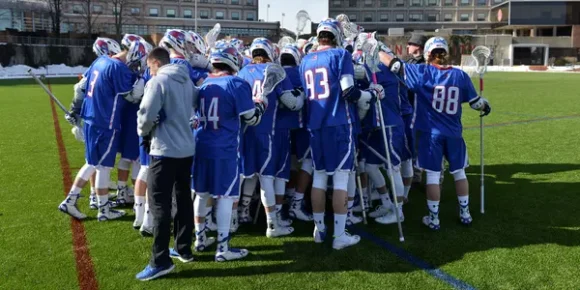
Adrian Torok-Orban begins his first season as head coach of the UMass Lowell men’s lacrosse team, bringing years of coaching experience and a new vision for the program.

Torok-Orban attended and played lacrosse at Robert Morris University, where he later served as an assistant coach from 2021 to 2023. He then held an assistant coaching position at Fairfield University from 2023 to 2025.

Now leading the River Hawks alongside assistant coaches Connor Kubikowski and Steve Moreland, Torok-Orban hopes to establish a new culture built on trust, accountability and strong relationships.

In an interview with The Connector, Torok-Orban discussed his leadership philosophy, the challenges of taking over the program and his vision for the upcoming season.

Torok-Orban explained what initially drew him to the opportunity and why he felt ready to take the next step in his coaching career.

“There’s very few head coaching opportunities… I was ready to take everything that I’ve learned and put my own spin on it and make something my own,” Torok-Orban said.

Beyond the opportunity to become a head coach, Torok-Orban expressed admiration for UMass Lowell as an institution, particularly its affordability and accessibility.

“I think one state school, affordability and value is something I definitely resonate with. I was born in a family of immigrants… so I definitely understand the value of a dollar,” he said. “You don’t always have to pay the private school education to have a great experience and get a great education.”

Torok-Orban also emphasized that UMass Lowell offers more than many people might initially expect.

“Nobody really knows how great UMass Lowell is until you really step on campus and you get a feel for it like wow, there’s actually a ton that this place has to offer,” he said.

As for his coaching philosophy, Torok-Orban made it clear that building relationships with his players is one of his top priorities. He believes establishing trust is essential, especially when taking over a team with upperclassmen who have already experienced a different coaching culture.

“The first thing for me is I’m a very relationship oriented guy. I want the guys to know that we care about them,” Torok-Orban said.

“When I first took the position, I called every single guy on the team, started building the network, asked them how they were doing, what they need, getting some of their opinions on what they liked, what they didn’t like from the last couple years, and what they wanted to see of this program moving forward.”

For Torok-Orban, the players have just as much responsibility as the coaching staff when it comes to building a successful program.

“Ultimately, as a coach, you set the standard, you set the vision, but the players are the ones that are actually in the trenches going out there and fighting for it,” he said.

When asked where he developed this coaching mentality, Torok-Orban credited several mentors who influenced his approach to leadership.

He specifically mentioned Andrew McMahon, Craig McDonald, Andrew Baxter, Kyle Hannan and Chad Sermon as coaches who demonstrated the importance of establishing meaningful relationships with players.

“They were all able to build trust through relationships and I saw a direct correlation of that trust leading onto the field,” Torok-Orban said.

Despite his excitement about the opportunity, Torok-Orban acknowledged that taking over the River Hawks comes with challenges.

One of the biggest obstacles is the team’s limited roster size, which presents difficulties when implementing a new system and building depth throughout the program.

“I think with larger numbers, you get larger diversity… with a new coaching staff what things look like on the field are very different, different terminology, different language,” he said.

“There’s always going to be some growing pains, but I think the biggest challenge is trying to figure out how to get the most out of a limited roster.”

Recruiting will also play an important role in shaping the future of the program. Torok-Orban understands that changing outside perceptions of UMass Lowell men’s lacrosse will take time and consistent effort.

“Every recruit we talk to is about how it’s new and it’s changing and there’s things that are going to look different,” he said. “There’s a perception of what this program is and whether it’s going to change or not.”

Another priority for Torok-Orban is allowing the team’s upperclassmen to take ownership of the culture they want to establish.

Rather than forcing a completely new identity onto the team, he wants experienced players to help guide the transition and establish expectations for their teammates.

“We have a clear list of our mission, our vision… and then let the upperclassmen kind of self-navigate and give them opportunities and a platform to speak up,” he said.

“We want to be player led and not coach fed… If we constantly have to feed every piece of culture and accountability and insight into guys on the team, it’s going to fall on deaf ears at some point.”

Torok-Orban believes this player-led approach will help create a stronger sense of accountability and encourage athletes to take responsibility for the direction of the program.

While success on the field remains an important goal, he also wants his players to develop as individuals beyond lacrosse.

“We want our guys for when it comes to success on and off the field to be the best version of themselves,” Torok-Orban said.

He also emphasized the importance of support from the UMass Lowell community, explaining that building a successful program requires more than the efforts of players and coaches alone.

“As for campus support that is vastly important… We want our first impression to be great every single time,” he said. “So that takes the entire campus to get us there. We have a ton of really great support from everyone here in athletics so it’s all hands on deck right now.”

As Torok-Orban prepares for his first season leading the River Hawks, his focus remains on developing relationships, establishing a player-led culture and creating a foundation for long-term success.

With a new coaching staff and a renewed vision for the program, UMass Lowell men’s lacrosse enters the upcoming season looking to build a stronger identity both on and off the field.

Support from the campus community will play an important role as Torok-Orban and the River Hawks work to establish a new chapter in the program’s history.


“NTE: Neverness to Everness” impresses

(Image courtesy of NTE Official Website. “‘NTE: Neverness to Everness’ offers the player a glimpse into an immersive urban setting.”)

Maxi France
Connector Editor

Chinese game developer Hotta Studio released the RPG game “NTE: Neverness to Everness” for worldwide audiences on April 29, 2026. This game combines anime character designs with English subtitles and voice acting to provide an immersive experience to players.  

The story involves a science-fiction setting where monsters have brought chaos to the everyday lives of the citizens of the city Hethereau. The player controls a character who has been hired by a team of investigators to help defeat these monsters, called anomalies. 

The gameplay involves the player controlling their character through various open-world locales to accomplish certain objectives known as quests. A quest can have the player interact with a particular character or visit a specific location, triggering cutscenes where characters interact with one another. 

Players explore the city of Hethereau between quests. During free exploration periods, the player has access to a phone where they can chat with other characters in the game, who may then direct the player character to satisfy a quest. It is also possible for the player to access minigames such as racing, taxi driving and fishing.  

Anomalies of various strength levels can pop up around the environment that the player is exploring. This will trigger a combat scene, in which the player can control different characters on their team to fight anomalies, which can include anything from an enlarged, mutated object to a robot monster. The game offers the player options to switch between maneuvers, with each maneuver cooling down and marking a waiting period before it can be used again. Eventually, when a player triggers a certain number of attacks against an anomaly, a character’s special powerup may activate. This is more powerful than a regular maneuver. The battle sequence ends when one of the opposing parties is eliminated, and if the player’s team loses, their character gets resurrected at the cost of some in-game progress. 

A strong part of the gameplay is the setting of Hethereau, which is composed of an urban area by the ocean and accompanied by suburban outskirts. The city is active, with cars on the roads and non-playable characters walking and interacting with each other on the streets. The developers include thoughtful dialogue between these characters if the player passes by them on the street, where they engage in everyday conversations. 

Hethereau is also realistic for an RPG with fantastical elements like the concept of anomalies. If the player jumps into the ocean from high enough, then they die from impact and respawn. If the player swims in the ocean for too long, they will drown. In addition, weather is also a factor in the setting, as it will rain occasionally.

It is great that the game is accessible with its captions. For example, a character may reference the name of an in-universe location and in the captions, there would be a note near that word with the place it is referring to, like a prison.  

However, the game is not without its faults. Firstly, on the mobile version, upon opening the game, the system may ask the player to restart after the first loading screen. Furthermore, the player is unable to exit out of certain cutscenes and can only progress through the main story quests if they reach a certain Hunter level. Until then, they are only limited to side quests in the form of minigames or missions that serve no place in the main story arc, like getting ice cream with a character. This style of gameplay can be tedious for those who would like a more consistent narrative focus.  

The game’s music is characterized by the unique quality that it varies depending on the setting. During the daytime in Hethereau, mellow jazz music can be heard in the background. At night, in driving mode, an electronic track can sometimes play. The graphics, particularly in the urban area of Hethereau, are notable for strong, vivid colors and detailed character designs. The developers show players details like how city lights reflect off the pavement of the sidewalks.  

In the end, while the open-world aspect of the game is intriguing, “NTE: Neverness to Everness” demands the player’s full concentration at times. However, this game is excellent for the player who would like a joyful break in their day. 

Grade: B 


United States midterm elections

(Photo courtesy of Makayla Mahoney) Outside of U.S. Capitol building on March 6, 2026.

Keith Smykil

Connector Contributor

Voters this past Tuesday issued a resounding rejection of the GOP, giving democrats control over both houses of congress. Going in, pollsters were expecting a strong performance by the democratic party, but many on both sides of the isle have been shocked at the sheer magnitude of the backlash.

A common thread among voters was opposition to the Trump administration. Heading into the midterms, President Trump asked voters to “think about me being on the ballot,” and they seem to have taken his advice, though clearly not to the expected result. Many of the key gains were in the states that elected the president in 2016 and helped him be reelected in 2024: swing states in middle America such as Iowa, Ohio and Kansas.

Voters key concerns were the cost of living, with working class families that make up Trump’s base being particularly effected. The numbers reflect a widespread distaste for both rising costs and the effects of the war in Iran.

The basic outcome has already been decided, with Democrats enjoying a healthy majority in both the senate and house. In the senate, the Democrats picked up 7 seats and are currently leading in the two that have yet to be called: Mississippi and Alaska. The house generally holds more safe seats in blue areas, but even there they picked up 44 seats, with another 19 looking to be split between both parties.

Contrast that to the Republican gains, with only two districts in Texas switching since 2024. Most of the states with major gains are ones that Republicans will need to win going into 2028. These include longtime battlegrounds like Minnesota and Georgia but also states that have recently become safer Republican bets, like South Carolina.

Even in races that went their way, the margins have thinned considerably. Once safe seats have become contested elections. This is even after the public attempts at gerrymandering by incumbent Republican states, hoping to secure more seats against exactly the kind of blue wave that has now occurred. Seats moved in this way largely didn’t change much, and many turned in the opposite direction.

Democrats are already planning to put their new numbers to work. Several public mentions of legal action against the Trump administration have been floated, alongside proposals for lowering costs.

Alongside the overwhelming nature of the victory, a number of historic firsts took place. In Georgia, the governorship went to Keisha Lance Bottoms after a landmark race, making her not only the first black women elected governor in Georgia, but in the United States at large. Another came closer to home with the election of Chris Papas in New Hamshire as the first openly gay senator.

Other races were notable due to their controversial nature. The race in Michigan was upturned three days from the election with the endorsement by a democratic primary contender of her Republican opponent against the eventual winner, Abdul El-Sayed, who became the first Muslim elected to the senate. To that end, the race has also been taken as a watershed victory for the American progressive movement, with El-Sayed’s victory proving the viability of socialist candidates in battleground states, perhaps making way for a larger moment.

This outcome has implications for the upcoming 2028 presidential race. With Trump’s two terms of presidency coming to an end, there is fierce debate within both the Republican party and the MAGA movement about who will succeed him. The Democratic party has similarly been going through a crisis of identity, with no enthusiastic candidates coming forward. However, with the midterm results as they are, that may not be at the top of everyone’s minds. Coming into 2028, only one thing is for sure: it’s going to be an interesting race.

Turning Point USA finds its way to South Campus

Aaliyah Afolabi

Connector Editor

Over the past couple of weeks, Turning Point USA, founded by the late Charlie Kirk, has not failed to make their presence known on UMass Lowell’s progressive south campus. Turning Point USA, or TPUSA, advocates for conservative politics on high school, college, and university campuses. According to Turning Point USA’s website, part of their goal is to meaningfully engage with communities to restore traditional American values like patriotism, respect for life, liberty, family and fiscal responsibility.

With the types of speech that the participants of this organization have delivered on campus, however, it proves contradictory to what some of their goals are, with “non-believers” and members of the LGBT community being the main targets.

As Christianity is one of the foundations that TPUSA was founded on, one of the goals preached to its followers is to, “[g]o into all the world and preach the gospel to all creation (Mark 16:15).” Being able to practice a religion and preach about what one believes in with no restrictions is a great embodiment of liberty, in which this organization has done. When it comes to the embodiment of respect for life, however, that extension of grace was not given for people who did not believe in the same thing or practice life in the same way as them.

On Oct. 29, Sin Awareness Day organizers and TPUSA happened to be on campus at the same time, in the same vicinity, and supported each other as they were “restoring traditional value” to America. People of the LGBT community were berated on how their nature is sinful and how they are sinners, given the fact that sexual orientation is not a conscious choice and is involuntary. Essentially, they were being told that they are sinful for something they cannot control. As for those who did not believe in Christianity, the “non-believers” as they say, would burn in an eternal damnation if they did not repent and accept Jesus Christ (the central figure of Christianity) as their lord and savior.

People have the right to educate others on their ideologies in this country, but when they are unaccommodating of others’ beliefs and tell them with hate that they are wrong and should believe in what they preach, that is a big disrespect to a fellow human life, which is contrary to TPUSA’s goals. When it comes to the spewing of bigotry, that isn’t listed on their website as one of their goals, but some individuals affiliated with this organization seem to be caught upholding hateful beliefs, which are later tied to be a representation of the organization.

For example, Crystal Clanton, one of the former favorite figures in TPUSA and whom Charlie Kirk praised as “the best hire we ever could have made”, had texted to another Turning Point USA employee, “I hate black people. Like fuck them all … I hate blacks. End of story.” TPUSA isn’t an inherently hateful organization, and organizers aren’t responsible for the hate that their allies spew, but in the long run, they get affiliated with hate due to their allies.

As TPUSA’s goals are mainly geared towards youth, each of TPUSA’s paid workers is supposed to meet a quota to make at least 1,500 student contacts per semester. Given the south campus’ reputation as being progressive, getting many students to sign may be a challenge for them. However, if simply just spreading their ideologies is the main goal and not money, they may still have some chance at that.

Careers in journalism event

(Image courtesy of Dr. Jenna Vinson. ‘A promotional flyer created for the ‘Careers in Journalism’ luncheon hosted by Dr. Wafa Unus.’) 

Marthy Martinez 

Connector Contributor

In an event and luncheon featuring Dr. Wafa Unus, a Fitchburg State journalism professor and columnist featured in publications like the Lowell Sun, Unus talked about the role of journalism in social movements and the flexibility that journalism has when it comes to future career paths.  

Last week, on Oct. 27, Dr. Wafa Unus, an expert in the field of journalism and communications, visited the UMass Lowell campus to engage in an event and luncheon with the UML community in an O’Leary Library classroom. Her visit was endorsed and recommended by two fellow UML faculty members, Dr. Jenna Vinson and Professor Katherine Flowers, who were inspired to have her come talk to the UML community after viewing her Lowell Sun pieces, notably her Behind the Bylines column. 

The first-half of Dr. Unus’ visit came with a public talk, in which she engaged the audience in a conversation on the role of journalism in social movements and how it enacts social change. Throughout her talk, Unus made suggestions to the role of journalism within movements, specifically commenting on how journalism breaks down current events and systemic developments into a concise, shared basis of knowledge for society. She also brought up historical examples of how journalism can aid or change the conversation of certain social movements, including that of the African-American owned Freedom’s Journal during the Abolitionist movement and how reporters framed their stories and collected evidences for cases like the #MeToo scandal. 

Concluding herher talk on the role of journalism in social movements, Unus then invited the community to come and “discuss” the interchangeability of careers in journalism in a public forum luncheon, equipped with free lunch for participants. The luncheon was met with more engagement from the audience, in which visitors posed questions on the impending dangers that come with having a successful career within journalism. 

One of the dangers expressed frequently in not only the luncheon, but also in Unus’ initial talk, came with the ever-changing inclusion of generative artificial intelligence (AI) in journalism and print media.“Journalism doesn’t operate without a human component,” said Unus in an interview after the luncheon. She corroborated her statement by explaining that AI would only “destroy” careers within journalism if it were to take jobs away from prospective journalists, and that most of the work associated with artificial intelligence comes from the work of actual humans, strengthening the “human component” of accurate and reliable journalism.

A growing issue that was mentioned in her luncheon came with the combination of other careers into the world of journalism. However, Dr. Unus made sure to highlight how other careers, such as in the fields of sports, business, and science (in which she had an extensive background on science writing) can play an indicative role in journalism and writing. 

“Even in the careers that you’re going into, the ability to communicate something clearly is really, really valuable.” said Unus. “You can say, ‘[T]his is this complex issue within my field and I can articulate it in a way where the masses can understand.’ [Y]ou know, it’s a good skill to have.” 

Another grey area focused on in her luncheon with the UML community came with the spread and digitization of journalistic media, primarily with how social media plays a role in the overall communication of journalism. The main concerns revolving around the role of social media with journalism came with how journalists and reporters can manage their accounts with their private lives. 

“Watch what you say or do on social media. Don’t post random stuff,” said Unus. “Don’t post stuff that’s going to get you in trouble or that’s [going to] reveal too much about you.” She backed up her claims with how journalists may want to express their “true” selves on social media platforms, but struggle with issues such as objectivity that can play a key role in maintaining responsibility for their social media presence.Although journalism is an ever-changing field that presents new guidelines to the role of investigation and communication when documenting current and past events, Dr. Wafa Unus reassures her audience that anyone, really, can step into the field of journalism. 


UMass Lowell graduate workers rally 

Image courtesy of UMass Lowell graduate workers rally

Maxi France  

Connector Editor

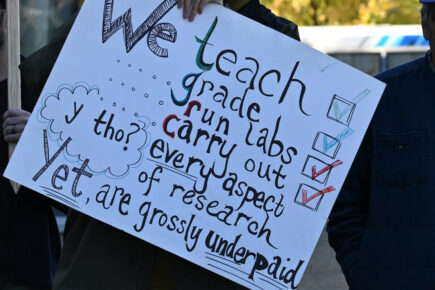
On Thursday, Oct. 29 at noon outside the Meehan Student Center, a group of UMass Lowell graduate workers gathered together to rally for better wages. Student onlookers shuttle buses heading from East Campus to South Campus during the time of the rally could catch a glimpse of people standing together in the front of the building with signs.

The event was open to the broader community, including students and faculty of UMass Lowell. Presumptive State Representative John Drinkwater of the 17th Middlesex District joined workers at the rally, as well as some UMass Lowell faculty who showed their support. Some student workers performed a Halloween-inspired street performance highlighting workers’ struggles and workers sang songs together. 

This rally is a continuation of the same complaints that these workers have raised back in 2021, where UMass Lowell graduate students spoke out about how they are struggling financially while on campus, with one student specifically explaining how better wages would help them pay for their dental and vision care.

According to the Graduate Employee Organization, the union for graduate workers at UMass Lowell that consists of 500 teaching and research assistants that serve undergraduate students in classrooms and labs, graduate workers earn an average of $2,000 per month after taxes from working at the university while studying. These workers rely on these funds for housing during their studies, as many reside far from campus: around 21 percent of graduate students at UMass Lowell are international students, and another 15 percent reside out of state.

In the cases of graduate student workers for whom commuting from their hometowns to their graduate classes is not an option, the estimated housing cost in Lowell consumes approximately 75% of their monthly paycheck, based on the Economic Policy Institute’s Budget Calculator. The union has put forth that this creates a rent burden for student workers, considering how Lowell’s average rents come out to $2,150, similar to the average salary for graduate student workers.

John Drinkwater, elected State Representative of the 17th Middlesex District, speaks to the issue of affordability – “Everything has gotten more expensive. It is so hard to make ends meet. Everybody should be able to make a fair living wage, to be able to afford to live here in this community, in this city.” Tara Hong, State Representative of the 18th Middlesex District, adds – “We need to come together to support and help address the affordability issue. Graduate workers are the backbone of the university.”

The union is currently in wage negotiations with the university. The administration has made an offer to increase the wages of student graduate workers by 2.25% to 3%, which is around $74 a month. However, the union has calculated that this range of potential raises sits below the national inflation rate of 3.7% as of September 2026. This mismatch is also a key reason as to why the union is requesting the university to have their wages increased.

The union maintains that without fair wages and working conditions, graduate workers could face barriers to affordable health and dental care and uncertainty about their financial and professional futures. Their primary goal is to increase wages for graduate workers to match the actual rate of inflation and so that they can more easily meet their basic needs while they are studying on campus, as well as plan for future financial security. It remains to be seen, however, whether the administration and the union can bring their negotiations to a successful conclusion. This story is developing.


Artificial Intelligence Multi-disciplinary society

Jacob Edwards

Connector Contributor

In today’s world, to say that A.I and language learning models are a hot topic is a bit of an understatement. It’s safe that when a group of students at UMass Lowell came together to create a society based not just on A.I, but integrating it into many different disciplines within the university, there was a bit of backlash. Though the Artificial Intelligence Multi-disciplinary society as it is formally called, says that their goal is to help integrate A.I. into the various disciplines and majors across UMass. But they do not feel that A.I should be involved in all the majors offered. When asked about the issue, A.I.M.S’s Director of Technology, Harry Joshi said that their organization is actually trying to find representatives in the arts and music majors to keep A.I out of those areas of study. 


Despite this, A.I in the arts is not the only issue caused by its use. A.I. models like “Chat-GPT” and “Claude” require large sources of power and equally large spaces for processing power and data storage. Most of the large corporations who own and operate these A.I. models create large data centers to process and store that data. Which not only has contributed to the expanding RAM chip shortage in the consumer market but also use and pollute large volumes of clean water for their cooling systems. This has inevitably led to major environmental damages as well as the space they take in both rural and urban areas. When asked about how they plan to address the environmental impacts of A.I. Joshi said that they do have a project known as Coal2Core, which uses A.I. to evaluate retired coal plants and see if they can be repurposed for use in nuclear power or for new data centers. However, how they plan to address the environmental impacts of current data centers is still unknown. 


Though Coal2Core is not the only project the A.I.M.S has in the works. As a part of “Hackachusetts” 2026, they created “ShortCut”, which is a sfotware that assists students in navigating UMass Lowell by using both Bluetooth signals along indoor mapping. They also have created AIMFlow. A free open-source speech to text program that runs on one’s computer to help assist in writing and or using applications. On top of that, A.I.M. has partnered with the UML chapter of Nurses without Borders, to use their expertise with A.I. to support the organization in its medical endeavors. It seems that A.I.M’s main mission with all their projects is to use A.I. as a tool to help and assist not just the students of UMass Lowell but also people who are in need of it. But as a student led organization, their outreach only stretches so far. Especially with major companies such as Google and Meta who still use A.I. in more unethical ways with no regard for the people they may hurt. Which is why this club had been adamant in getting more students involved in their mission. And want to make sure that A.I. is an ethical tool used to help the students of UMass Lowell in whatever major they are a part of.