
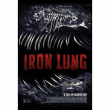




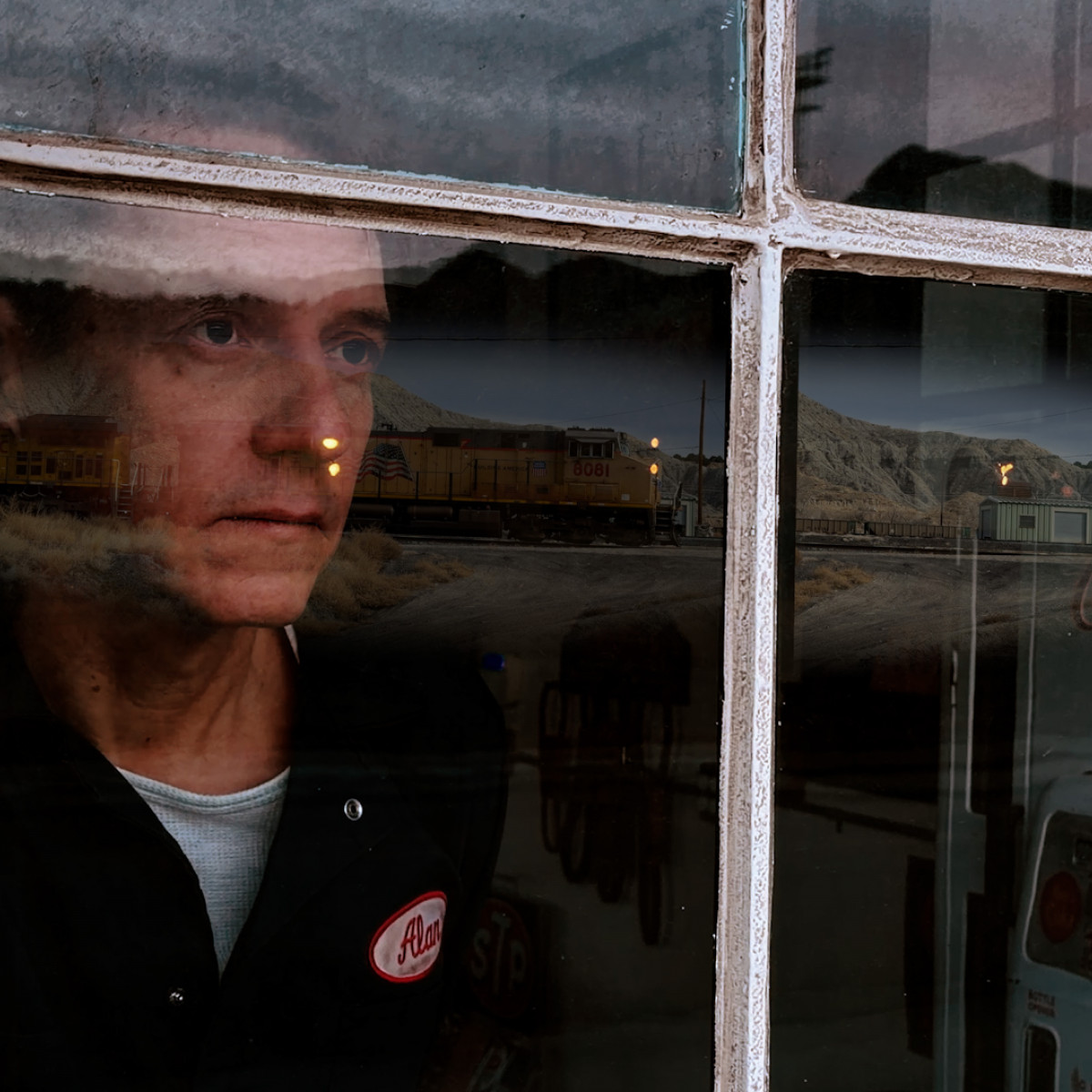
(Photo courtesy of Alan Williams) “Somewhere There’s a Train” cover art
Benjamin Heffner
Connector Editor
Dr. Alan Williams, Coordinator of Music Business & Musicianship at UMass Lowell, released his newest single, “Somewhere There’s a Train,” on Friday, Feb. 20, along with an accompanying music video.
Q: What went into the creative process?
A: “Somewhere There’s a Train” is part of a new album coming out March 6. It came towards the end of the writing of the batches of stuff. Towards the end of last summer, I had made plans to record some drum parts with my friend Ben Whitman in Toronto and the chorus just popped in my head, walking down a hiking path. I was like “huh, I don’t know what that’s about.” I let it go, and kept walking, sat down for a while, had lunch, and it’s still in my head. So, I started singing it into my phone and I remember thinking, “OK, I’ll build this song off that maybe.” And that’s what I did pretty much the next day because if I wanted to play on it, I make it a song. So, I did and part of the process is singing through the chorus and trying to figure out where it goes. I’ll sing the line and then maybe try a different melodic ending in a different chord, etc. And I realized, “OK what I’m doing is setting up a form. That works.” The song got written that way, and I realized I had an idea to make the song really long. There’s a period of music that I grew up with, where it was not uncommon for there to be radio edits, whereas if you bought the album, it would be a 7-minute track with extra stuff. And it used to be really fun to be listening to the radio and wonder if it was going to be the short or full version. There was also a former student who graduated eight or nine years now who had a blues band, and I thought it’d be fun to bring him in, and he came up with a really cool melodic solo in the middle. It’s like, “OK, every time we play that song, it’d probably be that kind of thing.” And then at the end, it was this free form, little blues thing, but I loved what he played and decided, “no, we have to keep it.” At first, I thought “maybe I just throw it out,” but now there’s two versions of the song, the single and the album version.
Q: When did you start recording music?
A: The first thing that ever got released, I was in a band in college. We put out a vinyl four song EP with three of the songs written by the band members. I had one on there, and then one was a really hideous and credit cover of “Heard it Through the Grapevine.” And then after graduation, I formed a band called Knots and Crosses. We put out two CDs and then got signed to Island Records and dropped by Island Records and broke up. And then around the start of the millennium, a small label approached us just to do a compilation record. So, we had a bunch of the old stuff and two new songs added to that. I formed a group called Birdsong at Morning and that was explicitly to be my music. We put out a four CD box set and then two more CDs after that. Prior to that, I had recorded a solo album and decided not to put it out because I had a crisis of faith. So, after COVID-19, I decided to put out that record that I had not put out by rerecording the vocals, which were, I think, the weak part [needing] a few adjustments to mixes. And I found an unfinished song when I went back to the master reel, so I got to add a song, which was kind of nice. And then since then, I’ve done one other album under my name, about four years ago, and then this new one comes out.
Q: How was the music video created?
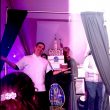
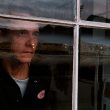
A: So, the song is a narrative. It tells a story and makes it really easy to think about how would it look, because you ask, “how would I tell the story visually?” So, it always looked like a movie or a music video in my head, even as I’m writing the song. But I had this idea that it would be good for a narrator to be in some small town, maybe out west in the desert. And there’s got to be a train, because that’s the song, right? So, I started looking online, “are there places where you could find a rundown gas station or some small town that I could go to and make a little cheap video?” And there were places outside Los Angeles, but they were already set up for filmmaking and I was like, “yeah, I can’t afford any of that.” But then I found an article in the New York Times about travel to rural destinations, and one of the places they talked about was this little town in Utah called Helper. And when I read the story, I was like, “well, that looks really interesting.” And there was a photograph of a gas station that some couple had decided to renovate to bring it back to the 1930s completely trying to match every detail. I was like, “whoa, that looks awesome.” As I went on their website and had even more cool pictures, the interior looked great and then I thought, “yeah, the problem is, what’s on the other side of the street? Because it’s probably like a strip mall or something and you can’t really shoot.” So, I looked on a map and I was like, “oh my God, it’s a train track right across the street. It’s a train yard and a canyon wall, and it’s perfect. It’d be the perfect setting for the video.” So, I emailed them and called the number I found and they were really friendly. They’ve done a couple of commercials here and there. So, they gave me a rate, and I was like, “ooh, okay, that’s a little high for me, so they basically got it somewhat affordable to me. One of the reasons the New York Times was highlighting the place was that it’s actually a little stop on an Amtrak line. which most of the stops on Amtrak are cities. But it stopped at Helper, because historically, the name Helper came from trains trying to get up the last round of the Rockies out of Colorado in Salt Lake City. It was too steep. It would have to get a helper, an additional locomotive to pull the trains over. So that’s why it’s named Helper, and it’s still there for that purpose. So, anyway, I arranged to fly into Colorado and take the train into Helper. I brought my little phone camera and the couple that renovated the gas station also had a hotel and let me stay. And then the wife volunteered to do camera operating, so the expense was just getting out there. It cost me next to nothing to film most of it. And then there are two long shots where the guy’s imagining this great nonstop party on the train, and I realized I’d have to stage that. And I found those party buses that evidently, I’ve never done it, but the people, you know, they might go to the Super Bowl or a Fenway game or whatever, and they’ll rent this bus and bring all their friends and it’ll be a party. And I thought, “well, it kind of looks like a train car, same dimensions.” So let me rent a party bus, and I’ll see if I can get people to come up and be actors in it. And I got Matt Swanton, the guitarist on the record, to come in to be in the video. But in my mind, the shot was in slow motion, so you could see everybody dancing, and the hair would be all whatever. But I also wanted him to play the solo at twice the speed. And when we filmed it, everyone’s just sort of moving slowly and he had to have all his fingers really moving fast. But you slow down the video and it’s so perfect.
Q: What do you want people to take away from this?
A: I’m hoping people realize you can have a party bus in your mind no matter where you are. Go ahead and dream and maybe you don’t even ever have to leave Helper. The other version of that dream is that maybe some of his dream [is] of being in Helper and [flying] from New England out to the Rockies, middle of December, to try to be in a completely different environment, so maybe the desert’s always browner on the other side.
