











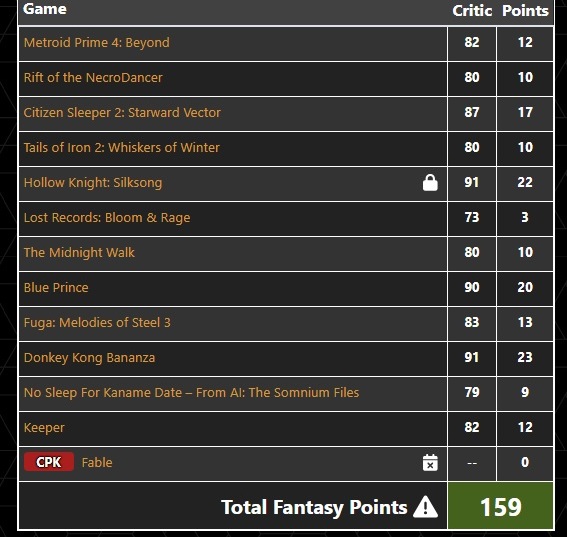
(Image courtesy of Rick Dalton. “Fantasy Critic brings the idea of fantasy sports to video game performance.”)
Rick Dalton
Connector Staff
Fantasy sports bring sports fans together to draft their favorite players and create a roster that will hopefully bring home their league championship. It is an exciting way to add an extra layer of fun to the sports season. Fantasy Critic brings this concept to gamers, with players taking on the role of publisher to draft the new releases that they think will receive the most critical acclaim. Points are earned based on the Top Critic Average featured on OpenCritic, a prominent game review aggregator. Seasons run for a calendar year, so now is the perfect time to organize a league for the 2026 season.
The first step is to recruit some friends and start a league. Leagues can range from 2 to 20 players, but larger leagues will force players to draft more obscure titles. The Fantasy Critic FAQ suggests that 4 to 10 players per league is ideal. This will ensure that everyone can pick a few major releases along with some popular indie games to round out their rosters. Fantasy Critic also provides suggested settings regarding how many games to publish based on league size, as well as what kinds of games will be eligible in the league. 10 games is a common number. New standalone releases are always allowed, with games tagged as remakes, remasters, expansions, yearly installments, early access games and director’s cuts left up to league discretion.
Once the league rules are established, it is time for the draft. Drafts for the 2026 season will open on Dec. 11, immediately after The Game Awards. Each player must draft half their roster, with the rest of the games to be obtained through bids in a weekly auction. Each player receives a starting budget of $100, so they must manage their budget and decide how much they are willing to risk on newly announced games throughout the year.
Games cannot be dropped once they receive review scores, forcing players to weigh publishing games early in the year or hold out hope that games without confirmed release dates will come out and score higher. Once leagues begin drafting, games are ranked by “Hype Factor”, which shows how popular a game is through both draft and bid acquisition. Weekly data shows how often games were added or dropped across all leagues. This helps players follow trends and decide which games are worth keeping on their roster. It is also noted how often games are counter picked, informing players about which games may be risky selections.
Counter picks add another strategic element to Fantasy Critic. Most leagues require at least one counter pick immediately after the draft, and some leagues add additional counter picks halfway through the year. A counter picked game is unable to be dropped, so successful counter picks can lock a player into a bad or unreleased game. However, the counter picker also faces risks. They will receive points if the game scores below 70 but lose points for games that score above 70. Unreleased games give both players 0 points, which favors the counter picker. The counter pick can make or break a season. For example, anyone that counter picked “Hollow Knight: Silksong” last year lost big, but those that counter picked “Grand Theft Auto VI” ruined another player’s season. Counter picks certainly throw a major wrench into draft strategy.
Playing Fantasy Critic encourages gamers to keep up with the many video game reveal shows throughout the year. Major industry showcases like The Game Awards and Summer Game Fest have become must watch events. There are also many publisher events to keep an eye on, such as Nintendo Directs, PlayStation State of Plays and Xbox Developer Directs. Each of these events are an exciting way to help players engage with the industry and learn about hidden gems that they otherwise may have missed. Savvy players that identify low profile, critical darlings such as “Blue Prince” and “Monster Train 2” will get a leg up on their competition.
If a year is too long of a commitment or a league is not an option, Fantasy Critic also offers a sitewide mode called Critics Royale. This mode lets each publisher accrue as many games as they can under a budget, with games priced based on popularity. Value is the key, as major releases can cost two to three times more than under the radar games. Anyone that loves to learn about obscure indie games will enjoy playing Critics Royale.
Fantasy Critic is free to play, and it is an incredibly fun way to stay involved in the gaming community.
Visit https://www.fantasycritic.games to learn more about getting started with Fantasy Critic.