










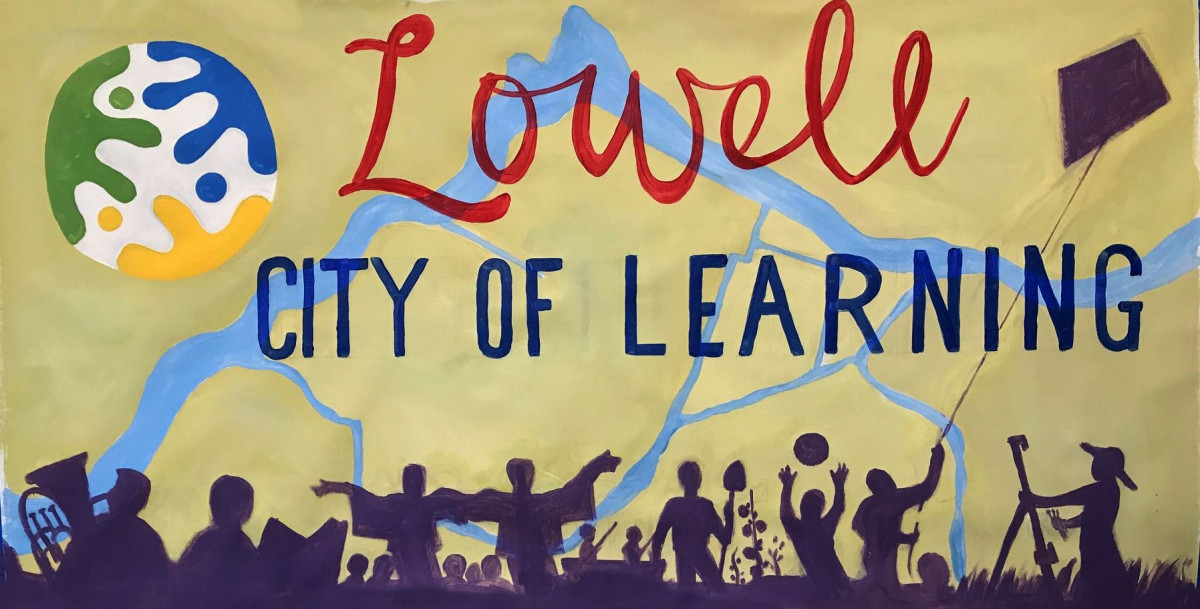
(Photo courtesy of https://www.lowellma.gov) “Lowell, Massachusetts, Becomes First U.S. City Named a UNESCO Learning City”
Emerson Tully
Connector Contributor
“Lowell being designated by UNESCO as the first Learning City in the U.S. is a wonderful achievement for the city, UMass Lowell, and all educators in the community. This puts Lowell on the global map as a place where learning, understanding, creativity, and skill building really matters.”
With these words, UMass Lowell Professor Emeritus John Wooding captured the significance of a milestone that had been years in the making. In early December, the City of Lowell received official recognition from the United Nations Educational, Scientific and Cultural Organization (UNESCO) as part of its Global Network of Learning Cities, becoming the first city in the United States to earn this designation. The honor reflects decades of collaboration among educators, city leaders, community organizations, and institutions of higher education; chief among them, UMass Lowell.
UNESCO Learning Cities are recognized for their commitment to promoting lifelong learning for all residents, from early childhood through adulthood. This model emphasizes that education does not stop at graduation or exist only within classroom walls. Instead, learning is understood as continuous, interconnected, and embedded within the cultural, civic, and economic life of a city. For Lowell, this philosophy is not new. The city’s recognition builds on a legacy dating back to the 1970s, when educator Pat Mogan first articulated a vision of Lowell as an “educative city.”
That vision has continued through initiatives such as Lowell City of Learning, a community-wide network that connects schools, higher education institutions, nonprofits, cultural organizations, and employers to create meaningful learning opportunities for people of all ages. UMass Lowell has long played a central role in this ecosystem, serving as both an anchor institution and an active partner in advancing access, equity, and workforce development through education.
Wooding, who has been deeply involved in Lowell’s lifelong learning efforts, discussed the city’s long-term commitment in a recent podcast reflecting on the journey to UNESCO recognition. He emphasized that this achievement belongs not only to city leadership, but also to the educators, students, and volunteers who believe learning should be accessible, practical, and community-centered.
That philosophy is increasingly visible on the UMass Lowell campus itself. This year, the university launched CityShips, a new experiential learning program designed to connect students directly with the city they study in. Through CityShips, students work on career-connected projects with local partners, gaining hands-on experience while contributing meaningful work that benefits Lowell.
CityShips reflects UMass Lowell’s broader mission as a public research university rooted in its community. The program allows students to apply classroom knowledge to real-world challenges, develop professional skills, and build relationships with organizations across the city. In doing so, it reinforces the idea that learning happens not just on campus, but throughout Lowell.
The program’s impact was on display at the December 12 Halfway Showcase, an event that highlighted student projects and partnerships across the Lowell City of Learning network. The showcase demonstrated how students engage in learning beyond traditional academic settings. This could be through collaboration, service, and direct involvement in the community. The Honors College CityShips aligns closely with this mission, linking education, skill-building, and civic engagement in ways that benefit both students and the city.
Throughout the fall semester, CityShips recipients worked with local partners to strengthen communication, increase visibility, and support ongoing initiatives across the network. While students have already begun developing valuable skills, the program is designed as a year-long experience, allowing participants to deepen their impact and growth through the spring semester.
Lowell’s acceptance into the UNESCO Global Network of Learning Cities represents more than an international title. It affirms the city’s longstanding belief that learning is a shared responsibility and a powerful tool for opportunity and equity. For UMass Lowell, the recognition highlights the university’s role as a leader in community-engaged education and innovation.
As Wooding noted, it is deeply satisfying to see years of work culminate in this distinction and equally exciting to see a new generation of students stepping into that legacy. Through programs like CityShips, UMass Lowell students are not only learning about Lowell; they are helping shape its future as a global model for lifelong learning