

UMass Lowell Connector Logo

Nvidia’s DLSS 5 pushes graphics in a new direction

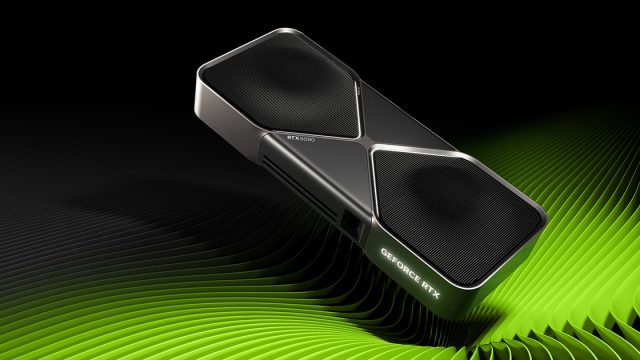
(Image courtesy of Nvidia. “DLSS 5 will use AI-powered rendering to change the graphics of games in real time.”)

Jesse Nguyen
Connector Editor

Video games, much like other media forms, have consistently improved as time passes and new breakthroughs occur. Games are increasingly released with more talented voice actors, more complex stories, and more sophisticated gameplay. An aspect of videos games that have grown rapidly is graphics. Graphics not only defines how a game looks but can also give a game a unique identity. A recent breakthrough in graphical technology is DLSS 5 released by NVIDA, a technology that utilizesgenerative AI to change a games visual fidelity (how closely something mimics the physics and appearance of a real-world subject).

A video demo posted on YouTube showcasing DLSS 5 posted on Mar. 16, 2026, utilized a handful of triple AAA titles like “Resident Evil Requiem,” “Starfield” and more to showcase the technology. All the games shown in this video already have realistic art styles, with nothing bordering close to the likes of “Mario” or other highly stylized games.

An article published by Henry Lin on NVIDA’s website describes how this technology works, saying “DLSS 5 takes a game’s color and motion vectors for each frame as input, and uses an AI model to infuse the scene with photoreal lighting and materials that are anchored to source 3D content and consistent from frame to frame. DLSS 5 runs in real time at up to 4K resolution for smooth, interactive gameplay.”

DLSS 5 is not entirely random in how it works, with Lin saying, “artists can determine where and how enhancements are applied to maintain each game’s unique aesthetic.”

The main focus of this DLSS 5 technology is “bridging the cinematic gap,” giving developers the tools to make video games look more akin to photorealistic Hollywood films.

In the video, the first clip utilizes Grace from “Resident Evil Requiem” as the subject for applying the DLSS 5 setting. With DLSS 5 on, she may look more realistic, but she doesn’t necessarily look like herself. The setting gives her more defined cheekbones, slightly higher set eyes, and deeper smile lines. What’s most visually apparent is how bright everything becomes, which may be due to how most AI models are trained on images and videos with lighting coming from any number of directions.

The “Hogwarts Legacy” clip additionally showcases the technologies difficulty in comprehending shadows and composition, with the hard shadows on the right side of the characters face completely disappearing.

The gaming industry has made great strides in improving visual graphics in the past 30 years. In the 1990s, it was a miracle to see games move from the 2D plane to 3D, with Doom (1993) being one of the most popular pioneers of such a feat. In the early to late2000s, game studios started to showcase the rapidly advancing technology they had developed with “Crysis” (2007) exhibiting a world filled with complex lighting, lush environments and high-resolution textures. This also signaled a time when games, particularly triple AAA games, shifted towards a more cinematic, Hollywood-like aesthetic, with “Uncharted 2” (2009) as a pioneer of this.

Most triple AAA titles released in the past ten years lean more towards a realistic art style, with more stylized games almost always being indie releases, or in Nintendo’scase, IPs that have already existed for several years.

With so much money on the line, it’s feasible to imagine that triple AAA studios lean towards this realistic style to better appeal to a wide audience. There can also be a deep-seated consumer consumption that better graphics means a better product.

Artistically, there can be many reasons why a game would want to lean towards a more realistic style. Perhaps it’s easier to emphasize with characters that appear the same as the player, or immersion was an important part in the games design.

With the advent of real-time ray tracing in 2018, a technology that simulates realistic lighting visuals and reflections, games like “Cyberpunk 2077” (2020) helped showcasethe full extent of how realistic these games can look.

Unfortunately, this realism often comes at a cost. “Cyberpunk 2077” was initiallyreleased as a graphical, performance nightmare, with the most powerful graphics cards at the time struggling to run the game. After several patches and updates, this is no longer an issue, but this pattern can be seen with other modern hyper-realistic games, like “Monster Hunter Wilds” released on Feb. 28 2025.

“Wilds” released with extreme performance issues, with many players expecting frequent crashes and overall poor visuals. Several updates have improved its performance issues, but the game still sits at a 69% approval rating on Steam.

The biggest question regarding video game graphics is the cost. A lot of reviews on “Wilds” doesn’t necessarily complain only about graphics, but other aspects about the game such as the shift away from the classic gameplay loop of what made the series “Monster Hunter” itself.

Are video games incessant focus on visual fidelity hindering other parts of it, like gameplay, mechanics and what really sets video games apart from other media forms? After all, 8 out of the 10 highest rated video games on Metacritic from 2025 do not have realistic art styles. That’s not to say realism makes video games bad, but it may be time to consider what the most important part of video games is and where technology should be developing.

Gosling and Ortiz star in “Project Hail Mary”

(Image courtesy of IMDB. “Ryan Gosling and James Ortiz star in a spacefaring adventure in ‘Project Hail Mary’.”)

Emily Lindtveit
Connector Staff

The much-anticipated movie adaptation Andy Weir’s bestselling novel “Project Hail Mary” was released March 20, 2026. The movie follows a science teacher and less than willing astronaut Ryland Grace (Ryan Gosling) and his attempt to save his planet from a sun-eating parasite. Grace, who wakes up from a coma with no memory of his life before trying to figure out anything, is left alone after his crewmates die due to system failures. His life comes back in flashes as he works through life on the ship. While on the ship, Grace meets another life form Rocky (James Ortiz) who is also trying to save his planet from the same sun eating parasite.

Ryan Gosling delivers a very charismatic performance, one that surprised for sure. He played Grace very convincingly. The relationships he forms with the Project Hail Mary team are realistic, but it also gives the ending a lot of reasoning. His character was charming, albeit in an awkward sense, but did not come off as Ryan Gosling playing himself. He played Grace’s awkwardness and intelligence well. Grace’s character goes through an interesting arc, where although he is smart while on earth and is their choice for going up, he’s treated by everyone else as a little dumb. He’s extremely competent, and that is shown more effectively when he is alone on the ship in space. His more selfless decisions towards the end feel in line with his character and how he has changed since leaving Earth.

The relationship that blooms between Grace and Rocky is obviously the character relationship at the forefront of the film. They form a tenuous partnership at first, just looking for the solution to their respective parasite problems. Overtime, they become closer friends and sacrifice different things for each other. Although that relationship is great, and the best in the film, the small friendships Grace forms with some of the humans on earth are also sweet. Eva (Sandra Hüller) and Carl (Lionel Boyce) become the first to believe in Grace’s idea, and to fully believe in his involvement in Project Hail Mary.

One of the films’ best attributes was definitely visual storytelling, and cinematography in general. Because a large part of the first hour when Grace and Rocky meet, they do not have a common language; a lot of their communication is done through visuals. The simplistic back and forth of them trying to communicate illustrate very well the struggles they are having. Even some of the transitions between Grace’s present moments on the ship and his past as a teacher or working for the government are edited very well, and show how jarring some of these memory flashes are for Grace. The cinematography is absolutely gorgeous, with shots of outside the ship and planets being standouts. The humor was well balanced, especially while on earth everything is so serious. There were very few laugh-out-loud moments, but that wasn’t necessary for successful comedic reliefs in the film. It was more subtle humor, and made the audience laugh without it feeling cheap. Rocky easily provides some of the funnier moments, certainly due to his naivety about how humanity operates.

The pacing overall is a little slow, but there is a necessity to it because of how complex the problem is. Some of the science may go over the audience’s head, and yes, it is a long watch, but it’s a movie worth checking out. It delivers a great story, with compelling arcs for characters and beautiful visuals of Grace and Rocky saving the stars. Grade: A-

2026 Spring SGA Election Results

Benjamin Heffner

Connector Editor

Listed below are the certified 2026 SGA spring election results:

            President & Vice President (top 1 elected):

                        Bryce Lee/Muriel Merheb: 42 (100.0%) ✓

            Student Trustee (top 1 elected):

                        Tucker Norton: 43 (100.0%) ✓

            Senators At-Large (top 9 elected):

                        Nancy Tekityamazzi: 43 (18.8%) ✓

                        Nathan Contorelli: 24 (10.5%) ✓

                        Merolla Dakkash: 24 (10.5%) ✓

                        Muhammad Naeem: 24 (10.5%) ✓

                        Michael Silman: 24 (10.5%) ✓

                        Mia Czarnecki: 23 (10.0%) ✓

                        Maretchia Dakash: 23 (10.0%) ✓

                        Keyko Diesing: 23 (10.0%) ✓

                        Jolia Sifien: 21 (9.2%) ✓

            Fine Arts, Humanities, and Social Sciences (FAHSS) Senator (top 4 elected):

                        Hope Bunnell: 12 (34.3%) ✓

                        Heidy Rodriguez: 10 (28.6%) ✓

                        Sean Antin: 8 (22.9%) ✓

                        Mera Hanna: 5 (14.3%) ✓

            Francis College of Engineering Senators (top 4 elected):

                        Erney Tefal: 6 (30.0%) ✓

                        Sid McQuaid: 5 (25.0%) ✓

                        Kyle Ray-Dutra: 5 (25.0%) ✓

                        Gabriel Rivers: 4 (20.0%) ✓

            Kennedy College of Sciences Senators (top 4 elected):

                        Maahi Pant: 15 (44.1%) ✓

                        Arjun Gupte: 7 (20.6%) ✓

                        Ewan Grant: 6 (17.6%) ✓

                        Nida Tahreem: 6 (17.6%) ✓

            Manning School of Business Senators (top 2 elected):

                        Bruno Jacob: 9 (52.9%) ✓

                        Anthony Massaro: 8 (47.1%) ✓

            Zuckerburg College of Health Sciences (ZCHS) Senators (top 2 elected):

                        Eden Adams: 1 (100.0%) ✓

                        Silvia Wahba: 0 (0.0%) ✓

            Class of 2027 President (top 1 elected):

                        Cole Stepanik: 5 (100.0%) ✓

            Class of 2027 Vice President (top 1 elected):

                        Aaron King: 5 (100.0%) ✓

            Class of 2027 Secretary (top 1 elected):

                        Paige Matthews: 5 (100.0%) ✓

            Class of 2027 Treasurer (top 1 elected): Paige Matthews

                        Courtney Houde: 5 (100.0%) ✓

43 votes were cast out of roughly 12,000 undergraduate students, a 0.4% turnout.

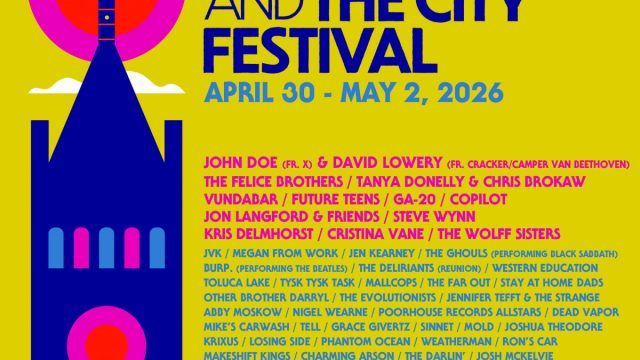
Lowell’s seventh annual Town and the City festival

(Photo courtesy of The Town and The City Festival) 2026 The Town and The City Festival Schedule

Makayla Mahoney
Connector Staff

The Town and The City Festival is making its way back to Lowell for its seventh annual weekend celebrating local musicians and artists. The festival will take place from Thursday, April 30, to Saturday, May 2, set in several businesses and restaurants across downtown Lowell, including Taffeta Music Hall, Warp & Weft, Lala Books, The Worthen Café and Brew’d Awakening. 

Day passes are $51 and the weekend pass is $81, while tickets for single shows are available for lower prices. Tickets can be purchased on their website or at specific times at the Revolutionary Valley Regional Tourism Office, Merrimack Repertoire Theater or Taffeta Music Hall. 

Each day will be filled with several performances in various locations in the evenings. Headliners for The Town and The City Festival include local bands and artists such as Copilot, Cristina Vane, David Lowery, Future Teens and GA-20. 

All music lovers are encouraged to attend, with all genres of music being performed that weekend. Indie, rock, blues, pop, country, R&B, soul, hip hop and jazz are some of the many genres to be expected, as well as comedy performances and book readings. 

Lowell galleries and exhibitions will be open as well, displaying local artists’ work and celebrating Lowell’s history and creativity. People are welcome to visit Brush Gallery Studios, Arts League of Lowell, Loading Dock Gallery and The Whistler House Museum of Art. 

The Town and The City Festival began back in the fall of 2018 to celebrate the famous Lowell author, Jack Kerouac. Their website states: 

“The Town and The City Festival is inspired by the creativity and exploration for which the author was so famously known and will present a diverse mix of musical genres and artistic disciplines to inspire discovery and to celebrate a love of life.” 

The festival is named after Jack Kerouac’s first novel, published in 1950, which takes place in a Massachusetts town named Galloway, representing the town of Lowell of which Kerouac was born and raised. Jack Kerouac is a prominent figure in Lowell’s history, celebrated for his world-famous novels and pioneering of the beat generation: a non-conformist cultural and art movement of the 1950s. 

Karl Sargent, a freshman nuclear engineering student at UMass Lowell, shared his take on the opportunity to have such events in Lowell: “Having art and culture in the city is important because it connects the people to the city more and makes it a more enjoyable city for all of us.” 

The Town and The City Festival is a great way to enjoy the art, music and creativity that Lowell has to offer as one of Massachusetts’ most historical cities. 

For more information on the event or to get involved, visit their website: https://www.thetownandthecityfestival.com/ 

To get a taste of what the festival has in store, listen to their spotify playlist: https://open.spotify.com/playlist/71nL9c8xniIyuembfn2BlE?si=MxKN2EMTTxqsHcTH06AjNg 


End of semester events for student relaxation

Aaliyah Afolabi
Connector Staff

As the semester and academic school year is coming to an end, with events like graduation and the completion of freshmen’s first year of college and finals, there are various feelings of happiness, melancholy, bittersweetness and stress that are felt by many students. To combat the latter of these emotions, there are events going on throughout the rest of the semester to help ease the effects of these feelings. From April 21 to May 10, the end of the semester, there will be many featured events held by student organizations for the UMass Lowell community to enjoy. A few of the campus organizations holding these events are the Office of Sustainability, the Arts and Design Department (ARTS), the Music Department, Association for Campus Events (ACE), and so on. 

In honor of Earth Day, on April 22, the Office of Sustainability will be hosting an Eco-Fest event on the lawn of the Campus Recreation Center. This will be an exciting outdoor celebration of sustainability, wellness and community. Whether one is passionate about the planet or just looking to enjoy a beautiful day outside, there’s something for everyone! You can expect sustainable education and activities, tabling from local organizations and student groups, free samples from local restaurants, ice cream and sliders, lawn games, fitness classes, a bouncy house and more. Going on from 11 a.m. to 2 p.m., feel free to partake in this celebration dedicated to the protection, awareness and preservation of our precious planet. On April 23, from 5:30 to 8 p.m. in Mahoney Hall’s Comley Lane Theater, will hold a celebration of the beautiful and irreplaceable art of graphic design. This event will celebrate the boundless creativity of the UMass Lowell BFA Graphic Design seniors. The event will begin with a screening and awards, followed by food, drinks and exhibitions in the University Gallery. View this as an oil painting artwork gallery, but digital, and most excitingly, free!  

Get ready for an immersive gaming experience as the Video Game Ensemble returns with electrifying new arrangements from your favorite video game soundtracks! On April 28, from 8 to 9 p.m. in the Moloney Performing Arts Center Concert Hall Seating, you can enjoy a thrilling night where our bands bring these iconic scores to life, seamlessly synced with live and prerecorded gameplay video. Also on the program, UMass Lowell’s Contemporary Electronic Ensemble has been pushing the boundaries of music with groundbreaking, dynamic performances that challenge and excite. The students craft original compositions and innovative arrangements, using electronics as the core of their creative expression. Those who are interested, especially “Mario Kart” fans, feel free to pop up.  Starting from April 18, ACE will be hosting a series of entertaining and engaging events all throughout the week. Starting off, there’s the day trip to the famous New York City. Students will have nearly a whole day of exploring the city before meeting back up before sunset to head back to Lowell. On April 21, a few days after, there will be a high energy bingo night featuring 16 amazing prizes in University Crossing from 6 to 8 p.m. Some of these prizes include a Meta Quest 3S, an iPad Pro, Sony XM5 headphones, a Ninja Creami and a Nintendo Switch. The day after, April 22, is the sunset social. This social will feature photo booths, crafts, giveaways, açaí bowl building and more. Last but not least, is the spring carnival on April 23, on the Riverview fields, from 5 to 8 p.m. This will include music, free rides, free foods and more, all for free.  

After such a busy semester everyone deserves a little break from work. Students are encouraged to take advantage of these upcoming events and take care of their mental health during these last weeks of the semester. For more information on campus events, students and staff can check out the Campus Group Events Calendar and the MyUML featured events page. 

“Tomodachi Life: Living the Dream” demo creates hype among fans

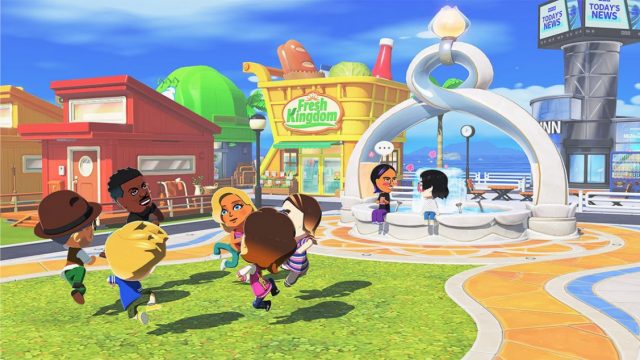
(Image courtesy of Nintendo of America. “‘Tomodachi Life: Living the Dream’ lets players watch an island of characters go through a life of strange happenings.”)

Rosalie Pineda
Connector Contributor

With the highly anticipated sequel to “Tomodachi Life” set to release on April 16 this year, nobody expected a free demo to drop on the Nintendo E-shop. Since the Welcome Version of “Tomodachi Life: Living the Dream” was made available for download on March 25, the internet has been abuzz with hilarious screenshots and growing excitement for the full release.

When starting the demo, the game jumps players right into it. Players are given a small island to look around with the camera, which in itself is a neat upgrade from the first game. Fans of the original game will recall how limited the camera movement was; there was no free movement nor rotation of the camera at all. Now, in this new game, just being able to get a full 360-degree view of a Mii’s room enhances the liveliness of the world.

The demo lets players make their very first Mii within minutes. This is where the fun really starts. Almost every part of the Mii is customizable; there’s a greater diversity of eyes, noses, hairstyles, and colors. Face paint offers an even wider variety of designs for Miis, and although the interface can be overwhelming at a glance, this feature has been especially embraced online. Some players have spent at least an hour designing their perfect Miis, leading to some genuinely impressive recreations of everything from fictional characters to something as abstract as popcorn. There’s even an option to upload real images from the Switch onto the Mii’s face. It’s absurd and wonderful.

Every Mii’s gender and dating preferences can be toggled as well. Notably, a nonbinary option has been added, and Miis can fall in love with the same gender (a highly requested feature from fans of the first game). It’s even possible to customize their clothing preferences for scripted events like weddings. Voices and personality types can also be customized, although for some reason, players are no longer able to choose a Mii’s favorite color.

Another appreciated feature is the option to specify which Miis are related to each other. One unpopular aspect about the first “Tomodachi Life” was the inability to indicate which Miis were related to each other in real life, which would lead to embarrassing situations when these Miis would develop romantic feelings for each other. Thankfully, in the new game, romantic interactions are barred for related Miis.

Players can also make up to three Miis in the demo. Having three Miis on the island provides a pretty good preview of what they can do; not only do they have funny interactions with each other, but they can also be fed, petted, and carried around the island. They can be gifted things like a soccer ball, expressions, and little quirks, which gives every Mii even more personality.

In a recent FAQ, it was confirmed that the number of Miis available to register would be 70. This is a significant decrease from the first game, which allowed 100 Miis to be registered. The reason for the change is unknown, but it is a bit disappointing, especially for players who had planned to make over 70 Miis.

Also, unlike its predecessor, “Tomodachi Life: Living the Dream” has no online sharing features. In the first “Tomodachi Life” game, sharing Mii designs and screenshots online was a popular way for players

to connect with each other. While this is certainly a bummer, one stand-out feature from the demo could explain why this change was made: there is an absolute lack of filter.

It’s common for many Nintendo games to restrict players from typing certain words or phrases that could be offensive, including curse words. This restriction applied to the original “Tomodachi Life” as well. The sequel, however, surprised everyone by completely getting rid of that filter. Dialogue options are more customizable, and this has led to a hilarious amount of screenshots where Miis express themselves in ways they never could have otherwise.

Perhaps the developers thought, “If they’re going to work around the censors anyway, why restrict them at all?” After all, it isn’t quite “living the dream” for some people if they can’t use certain words, which is why this freedom should hopefully extend to the retail version of the game.

It’s exciting to think about what could happen down the line in this digital age. When “Tomodachi Life” came out 13 years ago, the Nintendo 3DS was all the hype. A new generation of kids and adults alike are getting the chance to try out this game, and the creative opportunities presented to them are limitless.

Impressions are clear: this feels like just the beginning for the full game’s financial success.

Grade: A

“Louis Theroux: Inside the Manosphere” critiques hypermasculine movement

(Image courtesy of Netflix. “‘Inside the Manosphere’ dissects and examines a hypermasculine online bubble.”)

Haliyah Afolabi
Connector Contributor

Popular documentarian, Louis Theroux, noticed parts of the internet being taken over by a bunch of male influencers. These male influencers shared a theme of content that promoted anti-feminist, misogynistic, and male-supremacist views. The name given to this community that promotes these gender-based bigoted views is the “manosphere.” As the influence of these views became widespread throughout the globe, with even teachers reporting the effects of this content evident in their male students, Theroux sought out an opportunity to investigate the phenomenon first-hand.

He, along with his casting crew, filmed his interactions with the most influential figures of the community, “the heads of the manosphere.” These figures are as follows: HS Tikky Tocky (Harrison Sullivan), Myron Gaines (Amrou Fudl), Sneako (Nicolas Balinthazy), Justice Waller, and Ed Matthews. There were two notable figures in the manosphere community, British and American brothers Andrew and Tristan Tate, who refused to be filmed. Due to this refusal, mere snippets of their statements, mentions of their names, and what they were affiliated with were the only things produced in this film regarding to them (it would have been unrepresentative of the community if these two were left out entirely).

Spread all throughout the west, Theroux went to various cities to meet these influencers. He had a stay at British influencer, HS Tikky Tocky’s home for two days in Marbella, Spain. As Louis had his own crew filming their interactions, HS also had his own professional videographer filming.

While HS leads Theroux on a journey on what life looks like outside of the house for him, they meet up with the popular British influencer, Ed Matthews. On the second day of filming in Marbella, Louis notices Matthews and HS disappear from his sight and shows his discovery of them engaging in vulgar activity, which was censored, through the popular streaming platform, Twitch. Shortly after this absurd discovery, the focus shifts to Miami, the spiritual home of the manosphere, where an impromptu meeting is being held, which HS is attending.

In Miami, Theroux meets up with Americans Myron Gaines and Justice Waller. Louis interacts with a small fraction of Gaines’ circle along with a feature in his well-known podcast, Fresh&Fit. After Gaines, he meets up with Justice Wallace, a construction company owner and affiliate of Andrew and Tristan Tate, who created the “modern wealth creation” educational platform, The Real World. Based on the interactions with Gaines and Wallace, these two held the same sentiment of one-sided monogamy. This relationship dynamic, commonly popularized by the manosphere, allows for one party (the male), to engage in sexual or romantic relationships outside the union, while the other party (the female) is required to be exclusive. The last interaction with the notorious and widely social-media-banned figure, Sneako, in New York, is brief but just as important. Sneako shares with Theroux his antisemitic, queerphobic, religiously psychotic, and misogynistic views that are a representation of the beliefs that many of the manosphere holds.

Theroux uses fragmented clips, social media comments, and clips of these red-pill influencers, including those not interviewed, to diversify the representation of what the manosphere is doing to young men across the globe.

While Theroux interviewed these individuals, they remained courteous and made positive comments to his face but made negative comments about him online when he was no longer in their presence. This was very evident in HS Tikky Tocky, who not even twenty-four hours later of Louis filming, took a storm to the internet making negative comments, seeming to be threatened while Louis had made zero ill remarks about him. Being offended by a mutual agreement on effort to show the world one’s way of life, in which the other party said and did nothing that would make the other offended, counteracts this strong “alpha-male” personality being advocated for.

While the title of this documentary is named Inside the Manosphere, this film only represents a surface level of the community, but nevertheless, does a great job at displaying how and why these beliefs are harmful for society. Historically, it is seen that radical ideologies often lead to radical activity. To combat these harmful thoughts from being evidently widespread in young men’s behaviors, this film is recommended for anyone who wants to get a brief light on what the manosphere is and their beliefs system.

Summer Shack brings quality food to Alewife

(Image courtesy of Harvard Square Business Association. “Summer Shack serves quality seafood year-round.”)

Aaron Preziosi
Connector Editor

It’s no secret that New England is home to some of the best seafood in the country. It is hard to compete with a hearty bowl of clam chowder, a fresh lobster roll, succulent clams, cod, haddock or scallops. Summer Shack in Alewife, Cambridge MA, embodies that notion flawlessly. On their menu is a wide variety of classic New England seafood dishes, refined to perfection by the late celebrity chef Jasper White. Notably, the raw bar, advertised as “Cambridge’s largest”, features a rotating list of oysters sourced from around New England as well as clams and shrimp.

Diners looking to try a little bit of everything at Summer Shack’s raw bar should look to the sampler platter dubbed the “Tower of Power”: a two-tier platter of eight oysters, six shrimp, six littleneck clams, two clam ceviche, and two of Summer Shack’s own oyster and tuna sashimi, that is, finely sliced raw tuna and fresh raw oysters served with a tart and savory ponzu sauce, a bundle of crunchy and salty seaweed salad, sesame seeds, and a little dollop of caviar to round everything out.

The dining room itself cannot be ignored, of course. The lighting was warm and dim, creating a comfortable dining atmosphere. Tables are high-up, giving diners a good vantage of the enormous 1500-gallon lobster tank and 80-gallon steam kettles situated right in the middle of the floor. Being able to see these things will surely affirm to diners that what they are paying for is the highest-quality, freshest seafood around.

In addition to offerings like baked or pan roasted lobster, crab cakes, fish and chips, steamers, peel-and-eat shrimp and lobster rolls, Summer Shack also offers weekly specials, which we tried two of: the almond parmesan crusted halibut and the grilled mahi-mahi.

The halibut was delicious. Many times, dining out for crusted or fried seafood is disappointing, as the breading becomes soggy or thick, but this dish broke the mold with a satisfying and flavorful crunch, to say little of the tender halibut within. The lemon chive beurre blanc complimented the savory, rich flavor of the crust perfectly as well. The dish also came with garlic green beans and creamy mashed potatoes which lived up to their names, and did not disappoint as far as side dishes go.

The grilled mahi-mahi took on a vastly different flavor palette, however. The fish itself was a pleasant medium-firm with a tender, flaky texture. The grill imparted a slightly smoky char-broiled flavor. The accoutrements were what truly made it stand out, consisting of smoked chili-corn and avocado salsa, yucca chips, roasted kale and black beans with rice. The yucca chips were perfectly crunchy and served as a great way to scoop up extra salsa and rice.

All in all, Summer Shack is a pillar of the seafood right here in New England. Be it in the frigid winter or blistering summer, diners can count on Summer Shack to serve only the best.